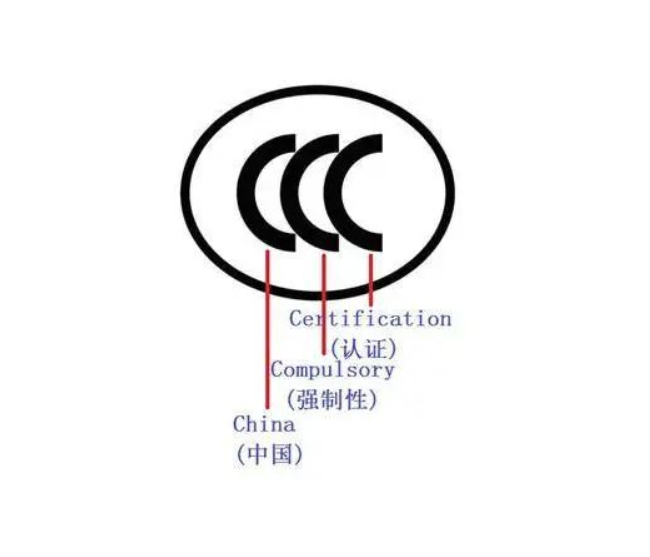
The full name of 3C certification is "Compulsory Product Certification System", which is a product conformity assessment system implemented in China to protect consumers' personal safety and national security, strengthen product quality management, and implement in accordance with laws and regulations. The so-called 3C certification is China's compulsory product certification system.
The 3C certification requirements have the following points:
Requirement 1: You must have a business license (limited liability company or self-employed business) to apply for 3C certification. Natural persons cannot apply for 3C certification with their own ID card, and the business scope of the business license must include what you need to apply for 3C certification this time. product.
Requirement 2: The factory must have basic production conditions. The so-called basic production conditions refer to the fact that the factory can assemble or produce products depending on its own production conditions, which is a basic requirement for production.
Requirement 3: Products submitted for inspection must pass the corresponding national standard testing. This is an important step of 3C certification, that is, companies need to prepare samples according to the requirements of the 3C laboratory, send them to the laboratory for testing and pass the test.
After the 3C certificate expires, can the previously produced products still be sold?
Generally speaking, there are three abnormal states of CCC certificates, namely, the certificate is cancelled, suspended or revoked, and the three are all invalid states. In practice, because CCC certificates are suspended more frequently than cancelled and revoked, the case of "continuing to be sold during the suspension period" is more common.
The CNCA stated in two replies (letters) in 2007: “During the period of suspension of the compulsory product certification certificate, the certificate owner (enterprise) shall not continue to sell the products covered by the certification certificate with the certificate, otherwise The behavior that will be recognized as unauthorized factory sales without certification can be punished in accordance with the relevant provisions of the "Regulations on Certification and Accreditation"." On June 24, 2008, the CNCA issued the "Cancellation, Suspension, and Revocation of Compulsory Product Certification The “Implementation Rules” clarify the circumstances and follow-up management requirements for certificate cancellation, suspension, and revocation.
Regarding the cancellation: "From the date of cancellation of the certification certificate, the products covered by the certification certificate shall not continue to be shipped or imported, and the products covered by the certification certificate that have been manufactured or imported may continue to be sold or used in other business activities."
Regarding the suspension: "The suspension period of the certification certificate shall be deemed invalid. During the suspension period, the products covered by the certification certificate shall not be shipped or imported. For products covered by the certification certificate that have been shipped out of the factory or imported, the certification body shall evaluate the possible safety of the product based on the reasons for the suspension of the certificate. Hidden dangers that may cause damage to human health and life safety shall be notified to the quality inspection department in a timely manner or take corresponding measures in accordance with relevant regulations."
Regarding revocation: "From the date of revocation of the certificate, no products covered by the certificate shall be manufactured, sold, imported or used in other business activities. The certification body shall evaluate the possible safety hazards of the product based on the reasons for the revocation of the certificate, and the In the event of damage to health and life safety, it shall promptly notify the quality inspection department or take corresponding measures in accordance with relevant regulations."
Therefore, in the impression of the general public (including some city supervision and law enforcement personnel), as long as the CCC certificate is cancelled, suspended or revoked, the corresponding product will not continue to be sold from the date of invalidation of the certificate.
According to Article 29 of the Regulations on Compulsory Product Certification (Order No. 117 of the General Administration of Quality Supervision, Inspection and Quarantine): “If a certified product is cancelled, suspended or withdrawn, the certification body shall determine the product category that does not meet the certification requirements And scope. From the date of cancellation or revocation of the certification certificate or during the suspension period of the certification certificate, products that do not meet the certification requirements shall not continue to be shipped, sold, imported or used in other business activities."
So how does the certification body determine the category and scope of products that do not meet the certification requirements?
Generally speaking, certification requirements include national laws and regulations, product standards, certification implementation rules, and factory quality assurance capabilities requirements.
The reason for the cancellation, suspension or revocation of the certification certificate (hereinafter referred to as certificate invalidation) may be that the certified product does not meet the certification requirements. The possible situations are as follows:
◆ The certified product has defects, which leads to quality and safety accidents;
◆ In the follow-up inspection, it is found that the certified product is inconsistent with the sample provided by the certification client;
◆ During the suspension of the certification certificate, the certification client fails to take corrective measures or fails to pass the corrective actions;
◆ The certification client obtains the certification certificate by fraud, bribery and other improper means;
◆ The certification basis or certification rules applicable to the product are changed, and the product fails to meet the change requirements within the specified period;
◆ Refuse to accept follow-up inspection or supervision sampling test without proper reason;
◆ The supervision sampling test fails; the factory inspection fails, etc.
The invalidation of the certification certificate may not be because the certified product itself does not meet the certification requirements, but also because:
◆ The validity period of the certification certificate expires, and the certification client has not applied for renewal;
◆ The certified products are no longer in production;
◆ Due to seasonal production, orders, etc., the certification client applies for voluntary suspension or cancellation.
Summarize
If the certificate becomes invalid because the certified product does not meet the certification requirements, the product category and product model covered by the certificate shall be deemed as not meeting the certification requirements. From the perspective of risk minimization, even if the product is produced before the certificate expires, it should be regarded as not meeting the certification requirements, so it cannot continue to be shipped, sold, imported or used in other business activities.
Once the certificate expires, products that do not meet the certification requirements shall not continue to leave the factory, be sold, imported or used in other business activities. So, how do we understand "factory" and "sales"?
"Factory" can be understood as activities in the field of production, and "sales" can be understood as activities in the field of circulation.
The "Interpretation of the Regulations of the People’s Republic of China on Certification and Accreditation" explains: "The act of leaving the factory means that the ownership of the product in the uncertified catalog has been transferred, such as sales, installation, use, gifting, etc. The consequences of the act are Products in the uncertified catalog may be used by consumers and users and cause harm.” It can be seen that leaving the factory means that the ownership of the product has been transferred, and it cannot be simply understood as the product leaving the factory. Pay attention to giving, or even giving the product to users for free use, are all acts of leaving the factory.
"From the perspective of common sense of the general public,'sales' is an act that is'occurring.' It is often not based on the definition of related goods'has been actually sold' or'ownership has been transferred' as the defining principle, as long as the seller purchases Actually uncertified goods, and the goods have been in the state of'for sale and available for sale', regardless of whether the goods are stored at the counter or in the warehouse, the seller can be deemed to have illegal acts of'selling uncertified products'."
Tips:
CCC certification is very important. Relevant companies should always pay attention to whether your 3C certificate is still within the validity period. If you want to inquire about CCC certification or apply for CCC certification, you can directly contact our company ZRLK , Our engineers will answer related questions for you in the first time!